When you’ve had a financial plan in place for several years, it’s only natural to revisit it your life evolves. I try to capture as many of these changes as possible in my twice-yearly planning update meetings. I get to see my wonderful clients, have a cup of excellent coffee, and catch up on their lives and possible lifestyle changes.
In two recent meetings, a couple of my clients had questions about one of their protection policies – critical illness. It’s a policy that would pay them a large lump sum of tax-free money should they develop a life threatening illness such as a heart attack, cancer or stroke. (Shameless plug: I talk about this extensively in both of my books: The Doctor’s Handbook and Retire-ish.)
One client was wondering if they should lower their overall coverage limit, while another had reached their 15-year milestone on their policy where they could surrender it and have all of their premiums refunded. In both instances, the immediate goal was to free up cash flow from a policy they felt might not be needed, or at least not as much, as when we first started their plan many years ago.
As your financial advisor, my job isn’t just to create charts and manage cash flow towards what matters for you, it’s to look at your entire picture and safeguard your long-term independence.
What would you do?
I know what *I* would say you should do, and it might not be what you’d expect. Neither did they expect it, and nor did a client last year who had asked a similar question.
I shared this recent story with my clients because it still gives me shivers. It’s a meeting I had last year with Jason, one of my long-term clients:
“Adrian, I think I’d like to cut my critical illness coverage in half. There’s a rental property that’s come up and I’d like to put the savings towards buying it so I can build up another cash flow stream,” Jason said in our Fall Planning Update meeting.
“Has your situation changed a lot since we last met?” I asked him. “You still have your mortgage, and your kids are teenagers soon to be off to university. We’ve grown your savings, but you’re in your prime earning years which we should still protect.”
Cutting his policy in half would ‘save’ Jason about $260/month, and I get that it’s more exciting to put that toward a rental property than a policy you hope to never collect on. Jason shared with me how great this opportunity was, and he wanted to pay down the mortgage with the rent and his insurance savings as quickly as possible.
My recommendation however, made him pause for a moment.
“Jason, ultimately it’s of course your money and I’ll respect what you want to do with it. My recommendation isn’t if you should keep or reduce your policy, it’s that you should avoid having a serious financial regret.”
“What do you mean?” Jason asked. “The real estate agent is certain they can get it rented for most of the mortgage amount.”
“Let me clarify,” I responded. “I’m not referring to the rental property.”
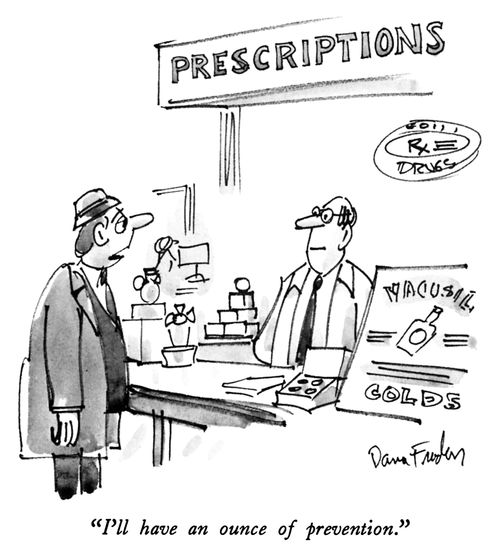
“What I mean is that I’d like you to first book a physical with your doctor, and request they specifically look for the risk factors of the three illnesses most likely to cause a claim: heart attack, cancer, or a stroke. This is my strongest advice I can give to you.”
I’m pretty sure he gave me an internal eye-roll, but that’s okay I can take it! We talked a bit more and he agreed to set a meeting with his doctor. We would meet and discuss options after that.
It turned out to be one of the most important decisions of his life.
A Little Prevention Went A Long Way
A couple of months later, I received a call from Jason. His doctor had diagnosed a serious cancer and he was going to have to go for surgery. Could we put in that claim?
While Jason scheduled his surgery, I got to work on his claim.
About a month later, a cheque for $1,000,000 was deposited into his Prof Corp. Having taken the time to get a doctor’s check up BEFORE reducing his coverage to reduce his premiums had not only provided him $500,000 more than he otherwise would have had, but the early detection gave him a much higher chance of survival.
And I’m thrilled to say, a year later he seems to have recovered and is back to work!
As your financial advisor, my job isn’t just to create charts and manage cash flow towards what matters for you, it’s to look at your entire picture and safeguard your long-term independence.
While money matters, being thoughtful with your decisions can make all the difference in the world!