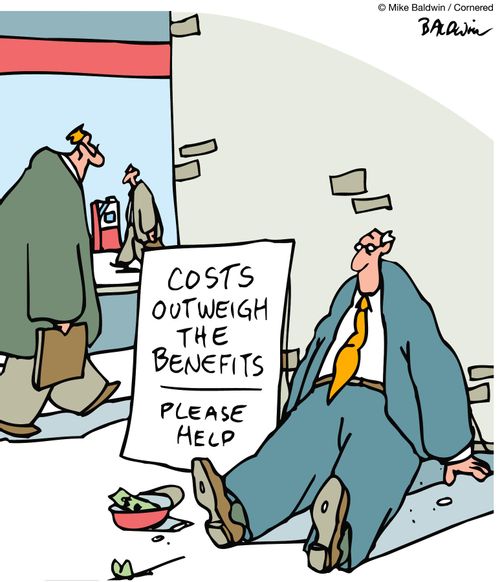
A while back, I did some tax planning for John, a physician client of mine. He and his wife Judy wanted to pay off the mortgage on their vacation property; and working with their accountant we were able to take out $400,000 at a much lower tax rate from their Prof. Corp than usual.
This not only allowed them to have a better night’s sleep with their debt reduced, but they also didn’t have to take out money at their top tax rates – a buck for them also meant a buck for the government!
But a few months later, they came back to me with a nagging feeling they couldn’t shake.
“We know the debt’s gone, but we can’t stop thinking about how a chunk of our savings are gone too,” John said. “We’ve heard borrowing to invest can be a good idea, especially since the interest is tax-deductible. What do you think, Adrian?”
I paused for a moment. It’s a question I often get asked since this topic is so widely promoted in the financial industry. (To be honest though, it’s not one I’m a fan of.)
“You’ve heard me often talk about head versus heart in your financial planning.” I answered.
“You ALWAYS say that to us!” Judy laughed. “You’ve said that’s why there’s rarely an all-right or all-wrong answer, but rather two points of view. And what’s right for us is finding the balance between them.”

“Exactly!” I replied.
“So, let’s first identify those two seats on the scale and see if one side feels better than the other. We’ll hypothetically look at borrowing back the $400,000, or investing that amount over a 10-year period. At the end of 10 years, we’ll cash everything out and see what we’re left with.”
I quickly put together an Excel sheet that allowed us to put in whatever variables we wanted and see how things compared.
And out came my trusty calculator!
(I get way, way too excited to do these kinds of calculations…my financial nerd power was on fully activated mode!)
With reasonable assumptions on rates of returns, interest payments, and future tax rates – what was the difference over 10 years?
Borrowing $400,000 to invest came out ahead. A little over $38,000 when all was said and done. Interest was paid and deducted, taxes were paid, the borrowed amount repaid.
$38,000
“Well….financially yes, you would come out ahead. But I’ve been planning for decades, and there are a few important things you need to consider that the spreadsheet doesn’t show you.”
“First….how will you FEEL if we have a sudden downturn in the markets, and your portfolio is worth less than what you owe – even if it’s only temporary? Your $400,000 investment is now worth only $350,000 or less? How does that sit with you?”
They both winced a little.
“I wouldn’t like that at all.” John admitted. Judy said, “Me either! I’d be freaking out a bit.”
“Yup. You’d probably feel like maybe it wasn’t a good idea and you should repay your loan, taking the loss and the loss of any interest you’ve paid.”
Ouch! The look on their faces said loudly what they thought of THAT idea!
I continued.
“First….how will you FEEL if we have a sudden downturn in the markets,
and your portfolio is worth less than what you owe – even if it’s only temporary?
Your $400,000 investment is now worth only $350,000 or less?
How does that sit with you?”
“Also, doctors can be feast or famine.
When you go on vacation for example, you’re not only spending money, but you’re not earning it either. Borrowing to invest has the cost of obligation. With monthly investing, you’re in control. If you need to pause contributions, whether because of a vacation, other expenses, a health issue or just life happening, you can. But when you’ve borrowed to invest, those interest payments are due every month, no matter what else is going on.”
“Here’s what ultimately the question for you to consider is.
At your current income level, would you rather have the risk for the gain, or work a few additional months past the 10 years to have the same amount with no risk?” I asked.
THAT gave them pause!
“I hadn’t thought of it that way,” John replied.
Judy added, “I guess we could see what we actually have saved by then and assess if we keep working a few more months, or if we don’t even need to.”
John pressed his lips together and nodded.
“If we had to, I could do a few more months standing on my head. I think I’d even sleep better that way than seeing the debt back again!”
Spreadsheets Don’t Capture Emotional Upheaval
What I often say to clients is this: just because something looks slightly better in a spreadsheet doesn’t mean it feels better in real life. Yes, the math can favour borrowing. But that assumes everything goes according to plan.
But to quote John Lennon: “Life is what happens when you’re busy making plans.”
Sometimes, the best financial strategy isn’t about maximizing returns.
It’s about making sure you still sleep well at night.
Enjoyed this article? I’d love to hear from you! I’m always interested in hearing about the unique financial situations doctors have. Send me a note! And make sure to check out my Amazon bestseller, The Doctor’s Handbook: 5 principles of wealth you weren’t taught in med school.